
Court & Behaviour Change
Court-Related Counselling & Behaviour Change
Court involvement or legal consequences can sometimes arise alongside substance use, addiction, impulsive behaviour, emotional dysregulation or recurring behavioural patterns.
Psychotherapy and counselling provide a structured and non-judgemental environment to explore the factors contributing to these behaviours, develop greater insight and accountability, strengthen emotional regulation and support more considered decision-making.
At Psychotherapy and Counselling Clinic Sydney, our work has a particular focus on the relationship between addiction, substance use, behaviour and the consequences that can follow, while also supporting clients experiencing broader court-related and behavioural concerns.
What We Support
Therapy may support clients experiencing:
-
Alcohol and drug-related legal matters
-
Drink-driving and other substance-related incidents
-
Addiction and relapse-related behaviour
-
Anger management and emotional regulation difficulties
-
Impulsive or high-risk behaviour
-
Difficulty managing conflict, frustration or strong emotions
-
Recurring patterns of behaviour resulting in personal or legal consequences
-
Poor decision-making associated with substance use or emotional distress
-
Relationship and family difficulties associated with addiction or behavioural concerns
-
Court-related stress and psychological distress
-
Clients referred or encouraged to attend therapy by solicitors or other professionals
-
Clients required to engage in counselling or therapeutic intervention
-
Ongoing treatment and behaviour-change work following legal involvement
Understanding the Behaviour — Not Just the Incident
An incident that results in legal consequences does not always occur in isolation.
For some clients, problematic behaviour may develop alongside substance use, addiction, emotional dysregulation, impulsivity, relationship conflict, psychological distress, ineffective coping strategies or established behavioural patterns.
Therapy provides an opportunity to understand how these factors interact while maintaining a clear focus on personal responsibility and the consequences of behaviour.
The purpose is not to excuse inappropriate or harmful behaviour, but to identify the factors contributing to it and develop more constructive ways of managing similar situations in the future.

Substance Use, Addiction & Legal Consequences
Substance use and addictive behaviours can affect judgement, impulse control, emotional regulation, relationships and decision-making, and in some circumstances may contribute to behaviour resulting in legal consequences.
Where substance use is relevant, therapy may explore:
-
Patterns of alcohol or drug use
-
Alcohol / Drugs and Driving Offences while under the influence
-
Triggers and cravings
-
The relationship between substance use and behaviour
-
Emotional and situational triggers
-
Impulsive decision-making
-
Relapse patterns
-
Consequences of substance-related behaviour
-
Coping strategies
-
Relationships affected by addiction
-
Strategies to support recovery and reduce recurrence of problematic behaviour
For some clients, addressing the legal consequences without addressing the underlying addiction or substance-use pattern may leave an important part of the broader difficulty unresolved.
Explore Addiction Recovery→
Anger Management & Emotional Regulation
Anger is a normal human emotion. Difficulties arise when anger, frustration or emotional distress contributes to impulsive reactions, escalating conflict, aggressive communication, damaged relationships or behaviour that results in significant consequences and abuse.
Therapy can help clients develop greater awareness of their emotional and behavioural patterns, recognise triggers and signs of escalation earlier, and strengthen their ability to respond more constructively.
Therapeutic work may include:
-
Identifying emotional triggers
-
Recognising escalation patterns
-
Strengthening emotional regulation
-
Developing distress-tolerance strategies
-
Improving communication
-
Managing interpersonal conflict
-
Reducing impulsive reactions
-
Developing more considered decision-making
-
Building healthier coping strategies
Where anger or emotional dysregulation occurs alongside substance use, addiction, anxiety, depression, trauma-related concerns or relationship difficulties, these interconnected factors may also be explored within therapy.
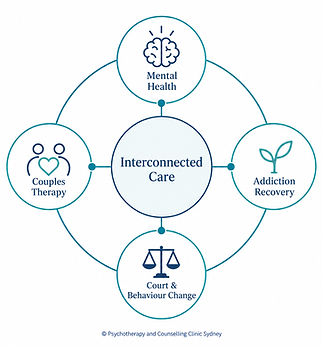
Addiction, Mental Health, Relationships & Behaviour Are Often Interconnected
Behavioural concerns rarely exist completely separately from the rest of a person's life.
Addiction may affect emotional wellbeing, relationships and decision-making.
Mental health difficulties may influence coping and behaviour. Relationship conflict may intensify emotional distress or substance use. Legal consequences can then create further stress across each of these areas.
Our therapeutic approach considers these connections rather than viewing each concern entirely in isolation.
Addiction Recovery →
Couples Therapy & Relationship Recovery →
Mental Health & Individual Therapy →
Our Approach to Behaviour Change
1. Assessment & Therapeutic Goals
Developing an understanding of the current concerns, relevant circumstances, behavioural patterns and the client's individual goals for therapy.
2. Understanding Patterns & Contributing Factors
Exploring triggers, emotional responses, substance use, coping strategies and other factors that may contribute to recurring behaviour.
3. Insight, Regulation & Decision-Making
Supporting greater awareness of consequences and personal responsibility while strengthening emotional regulation, impulse control and more considered decision-making.
4. Maintaining Progress
Developing practical strategies to support healthier behaviour, manage future triggers and maintain therapeutic progress over time.
Court-Related Therapeutic Engagement
Clients may enter therapy voluntarily, following advice from a solicitor, through referral from another professional, or as part of broader court or correctional circumstances.
The therapeutic focus is determined by the client's presenting needs and may include:
-
Addiction and substance use
-
Emotional regulation
-
Anger management
-
Impulsivity and decision-making
-
Psychological wellbeing
-
Interpersonal and relationship functioning
-
Accountability and insight
-
Behavioural patterns
-
Development of healthier coping strategies
Therapy remains an independent clinical process and does
not guarantee or determine any particular legal or court outcome.

Treatment Documentation & Court-Related Letters
Where clinically appropriate, existing clients may request documentation relating to their therapeutic engagement.
Depending on the circumstances and the clinician's direct involvement, documentation may include information regarding:
-
Attendance
-
Engagement in therapy
-
General areas of therapeutic focus
-
Treatment goals
-
Therapeutic progress where clinically appropriate
Court-related letters are considered for existing clients only and are
based on the clinician's direct therapeutic involvement and available
clinical information.
Any information provided to a solicitor, correctional service, court or
other third party is subject to appropriate client consent and relevant
professional and ethical obligations.
* The clinic does not provide legal advice or guarantee that therapeutic
engagement or documentation will influence the outcome of legal proceedings.

Section 14 & Diversion-Related Therapeutic Support
Where a client has relevant mental health concerns and their legal representatives are considering a Section 14 or other diversionary pathway, psychotherapy may form part of the client's broader treatment and support.
Where clinically appropriate, therapy may address relevant concerns including mental health, emotional regulation, addiction, behavioural difficulties, psychological wellbeing and ongoing therapeutic engagement.
The clinic's role remains therapeutic. Eligibility for Section 14, legal applications and legal strategy remain matters for the court and the client's legal representatives.
Working With Solicitors & Other Professionals
Referrals
Where appropriate and with the client's consent, therapeutic care may occur alongside the work of criminal defense lawyers, medical practitioners, correctional services and other treating or referring professionals.
Professional communication may assist with continuity of care and, where clinically appropriate, provide relevant information regarding the client's therapeutic engagement.
Our role remains therapeutic, with a focus on psychological wellbeing, addiction recovery, emotional regulation, insight, accountability and behavioural improvement.
Solicitors & Professional Referrals Welcome
Solicitors and other professionals seeking to discuss whether a
referral may be appropriate are welcome to contact the clinic.
Office (02) 8609 3067 — Mobile 0452 589 623
REFER A CLIENT / CONTACT THE CLINIC →

What to Expect in Therapy
Every client's circumstances are different.
Therapy begins by developing an understanding of the client's presenting concerns, relevant history, current circumstances, behavioural patterns and therapeutic goals.
Sessions provide a confidential and structured environment to:
-
Explore contributing factors and triggers
-
Develop greater insight into behavioural patterns
-
Consider the consequences of behaviour
-
Strengthen emotional regulation
-
Address addiction or mental health concerns where relevant
-
Improve coping and decision-making
-
Develop more constructive behavioural strategies
-
Review therapeutic progress over time
Treatment is individualised according to the client's clinical needs, circumstances and therapeutic goals, rather than applying the same intervention to every court-related presentation.
Therapeutic Approach to Court & Behaviour Change
Our approach is evidence-informed, non-judgemental and individually tailored, while maintaining a focus on personal responsibility and meaningful therapeutic progress.
Depending on the presenting concerns, therapeutic work may draw on:
Cognitive Behavioural Therapy (CBT)
Exploring thoughts, behaviours and patterns that may contribute to current difficulties.
Acceptance & Commitment Therapy (ACT)
Supporting greater psychological flexibility and more values-consistent decision-making.
Motivational Interviewing (MI)
Supporting motivation, engagement and readiness for behavioural or substance-use change.
DBT-Informed Strategies
Supporting emotional regulation, distress tolerance and interpersonal effectiveness.
Trauma-Informed & Relational Approaches
Considering relevant psychological, relational and life experiences while maintaining an appropriate focus on current behaviour and therapeutic goals.
Ready to Take the Next Step?
Whether you are navigating court proceedings, addressing substance use, addiction, anger, emotional regulation or behavioural patterns that have contributed to personal or legal consequences, professional therapeutic support is available.
Sydney-based • Online Australia-wide
or
Schedule Court, Behaviour Change Therapy Appointment/ Consultation Today
With our support, you can navigate life’s challenges with greater clarity, confidence, and emotional strength. Contact us today!